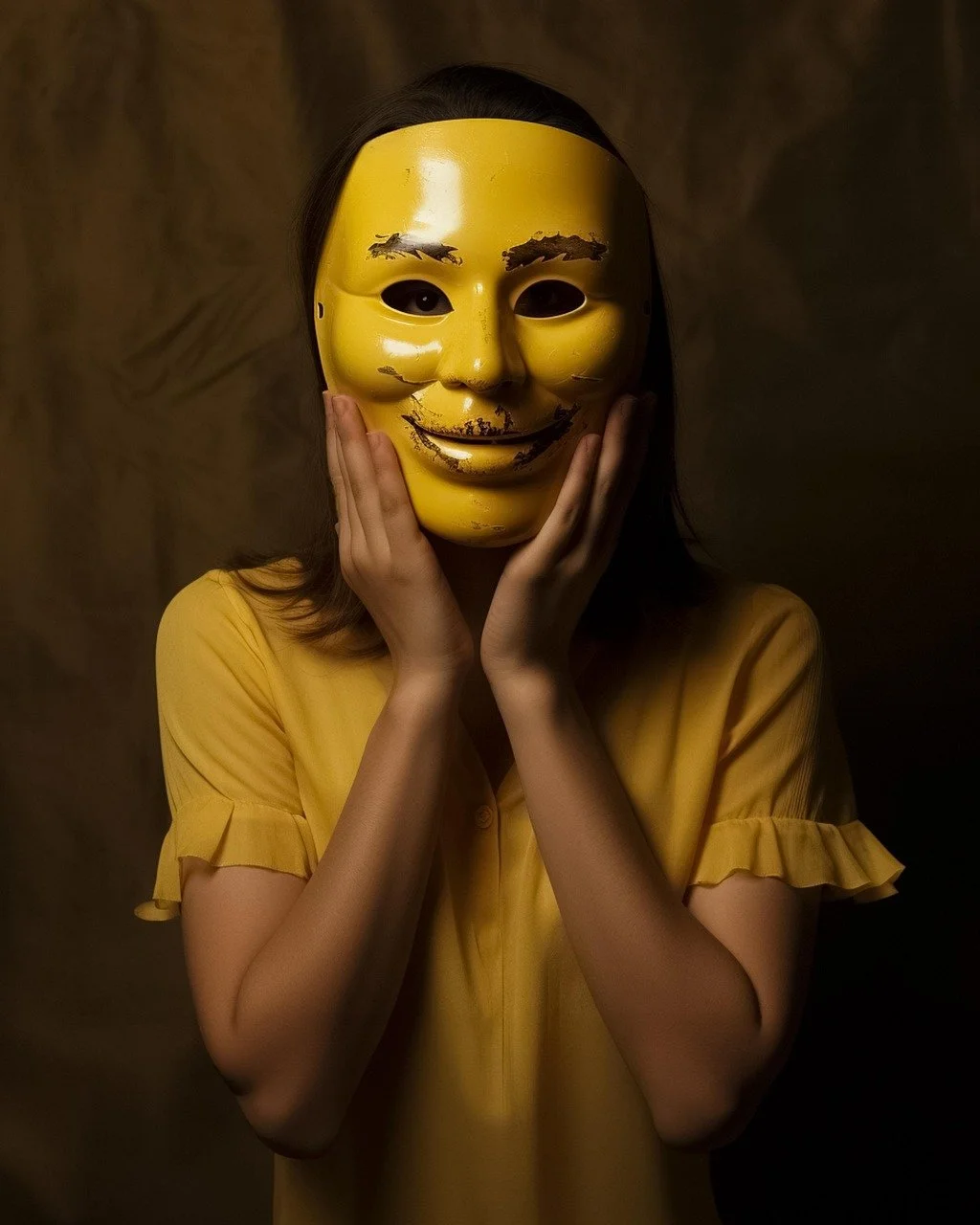

The Financial Cost of Making Myself Invisible

A few years ago, one of my closest friends ended our friendship with a sentence I will never forget:
“I cannot be friends with you because it’s the Vangile show everywhere we go.”
Another close friend, who was also part of the friendship, added:
“Vangile, you have to learn to make space for other children to shine and stop being so selfish.”
I was shocked.
And deeply hurt.
At the time, I’d just published my first book, Heart, Mind and Money, and it was doing well so I was excited and was proud of myself becase I had accomplished something that meant a lot to me, and all I wanted was to celebrate that milestone with two people I loved.
Instead, I found myself grieving the loss of two beautiful friendships and I didn't just grieve them, I also started questioning myself.
Was I really that selfish?
Was I taking up too much space?
Was I making everything about me?
How could I learn to be less?
Over the next two years, I became incredibly good at shrinking myself. I tried to figure out how to “make space for other people to shine” and I learned how to stop talking about my accomplishments.
I became careful about what I shared, I second-guessed my excitement, tried not to “hog the spotlight” and somewhere along the way, I relearned how to become invisible, a pattern I had abandoned in my childhood.
I didn't know that's what I was doing at the time, Ithought I was being considerate, unselfish and learning how to be a better friend.
I was walking a very narrow line between honoring myself and making sure I didn't upset the people around me.
I had learned that being fully myself could cost me relationships so I started making myself smaller to keep people.
And that pattern didn't stay in my friendships, i followed me into my business, my relationship with money and my dreams for my life.
I started saying things like:
“I don't know what I want.”
“I'm not sure.”
“I'm confused.”
“I'm not good enough.”
“What will people say?”
“I'm not that good at entrepreneurship.”
“I don't really care about the money.”
At the time, these statements felt like honest assessments of myself but now I see them differently - I was using them to hide from myself, and concealing my desires, my ambition and my own sense of possibility.
Deep down I believed that if I didn't admit what I really wanted, I didn't have to deal with what might happen if I actually went after it. And if I didn't acknowledge how ambitious I was, I couldn't be accused of being too much.
If I didn't talk about how much money I wanted, nobody could judge me for wanting it.
If I didn't allow myself to fully celebrate my success, I wouldn't trigger anyone else's discomfort.
I called it being unselfish but underneath it was a fear of being seen, afear that my expansion might upset people nd that my success might make other people uncomfortable.
It was also a fear that if I became too visible, I might lose the people I loved.
And this is when I started creating the lessons and meditations on the vow of invisibility in the Money Magic course because i started to understand that invisibility wasnt wasn't simply about hiding from the world, it was about learning not to see myself.
There’s a particular kind of invisibility that happens when you stop allowing yourself to fully acknowledge your own brilliance; you don't just hide your gifts from other people, you hide them from yourself, you stop asking yourself what you actually want, you stop dreaming as big, you stop setting ambitious intentions and you convince yourself that you don't really care about money or being seen in your brilliance.
When it comes to money this vow can be incredibly powerful, because let's be honest, having money can make you visible, spending money with ease can make you visible, building a successful business can make you visible and talking about your achievements can make you visible.
Becoming more visible can also change how the people around you respond to you.
For some of us, this fear of being seen has deep roots because we watched our parents and other family members experience criticism, jealousy or rejection when they became visible.
Some of us tried to showcase our brilliance as children and were ignored, dismissed or told not to think too highly of ourselves and were taught that talking about our achievements would attract envy orwitchcraft.
That last one has been particularly significant for me, and I had to do some deep work around it because when you learn that visibility comes with consequences, hiding can start to feel like protection and eventually, you don't just hide from other people, you hide from yourself and your own potential and stop yourself before anyone else gets the chance to stop you.
Looking back, I can see how much this self-imposed invisibility cost me: opportunities, money, the freedom to fully acknowledge what I wanted and the experience of being able to look at myself and say: “I see you. I see what you've created. I see what you're capable of. And you don't have to make yourself smaller for other people to be comfortable.”
I still think about those friendships because I have lost soo many friendships on my journey of expansion.
I have had to learn to hold the pain of what happened without deciding that either of us was entirely right or entirely wrong.
But I can also see what I learned from that experience - I learned how quickly I could turn someone else's discomfort into a story about what was wrong with me and I learned how dangerous that can become when you start using that story to make decisions about your life.
The question isn't: “How do I become less selfish or not too much?”
The question is:
“What if I've been calling self-abandonment unselfishness?”
What if making space for other people doesn't require me to disappear?
What if someone else's light doesn't require me to dim mine?
What if I can celebrate myself without taking anything away from anyone else?
And what if I can become wealthy, successful, visible and expansive without believing that I have to apologize for it?
These are questions I'm still leaning into and know I don't want to spend the rest of my life being liked at the expense of being fully seen by myself.
So dear reader, I leave you with the following questions:
What has making yourself invisible cost you?
How has it shaped your relationship with money?
Where have you told yourself “I don't know what I want” when, somewhere underneath the confusion, you actually know exactly what you want?
What would change in your life, and in your finances, if you finally gave yourself permission to truly see yourself?