
In episode 11, we interview Carlo Mariani, the founder of thepropertycoach.co.za.
Carlo coaches people, mainly women of color, on how to achieve financial freedom by building property portfolios.
In episode 11, we interview Carlo Mariani, the founder of thepropertycoach.co.za.
Carlo coaches people, mainly women of color, on how to achieve financial freedom by building property portfolios.
How can I think wealth creation or debt repayment when I have no money coming into my life and I am totally broke?
I often get asked this question.
I get you!
Trust me, I have been there so I want to share a story with you.
In 2011, I was totally broke and done for. A friend of mine introduced me to a coach, Jo Ntsebeza (she’s one of the many witnesses to this journey) and I asked her to coach me.
I used the very little I had to pay her instead of paying my debt because I was on the brink of ending my life but there was a part of me that wanted to make a last effort.
Also, I had gone to a vipassana meditation retreat, that helped me see that my emotions were playing havoc on my life.
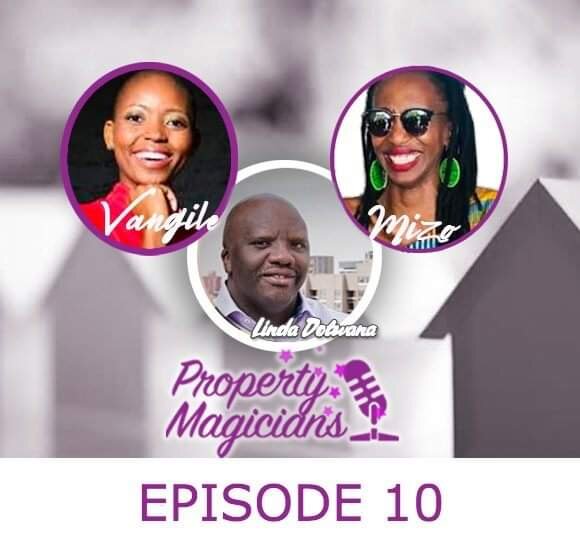
In episode 10, we interviewed Linda Dotwana, a portfolio manager from TUHF.
TUHF is a financier that focuses on granting loans to property entrepreneurs who are focused on investing in the inner city. They have financed up to 40,000 residential units in South Africa.
There’s a money myth that a lot of people, in particular South Africans, buy into and believe.
That myth is that moving to another country will change you finances and lead to financial freedom.
I bought into this myth as well and it shaped my life.
I started traveling and living abroad right after graduation in 2005 because I believed that's what would lead to financial freedom.
In episode 9, we interview Ntombi Sithole, a full time property entrepreneur, who shares with us how she was able to build a property portfolio that cashflow a. R105, 000/ $7,000 per month.
She shares how she bought her first building in 2015 for R 2.5 million ($167,000) and how that building is now worth R6 million ($401,000).
I can see how my history of oppression as a South African has led to a collective victim shadow in my maternal family and how this victim shadow has affected our relationship with money:
We feel powerless with money - we never feel like we can master money. It feels like financial events just happen to us. My maternal family has this belief that money is something mystical that only the lucky few can ever master it.
We're always operating from a sense of blame - it's never our fault, our financial mishaps are witchcraft or someone’s fault. I spent years blaming my childhood for my debt. I’d convince myself that my relationship with money would’ve been great if I had a better childhood or if I'd been loved better as a child.