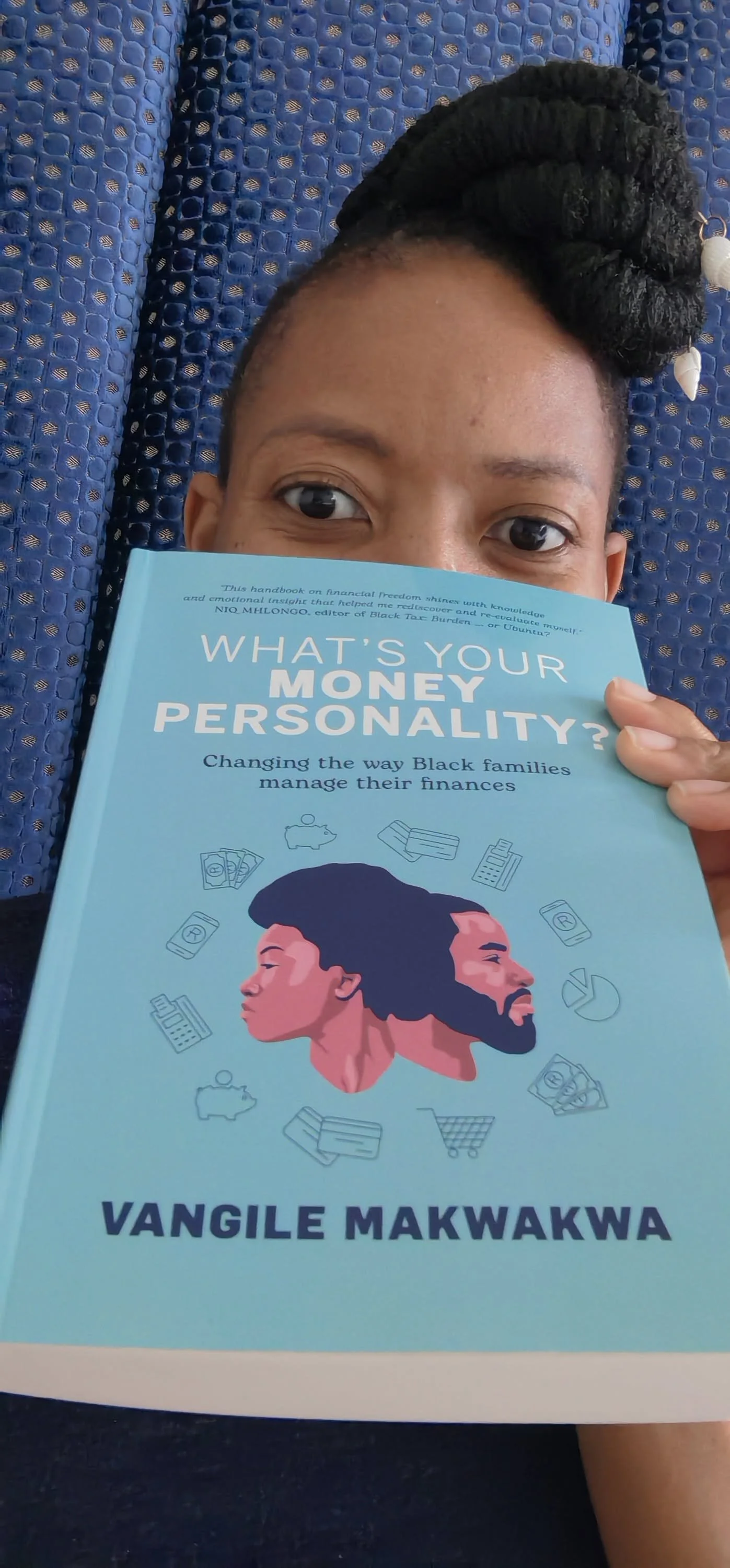

Survival Money Moment 002: You get paid and you don't want to look at your bank account or payslip

It's payday.
Your salary lands in your account.
Instead of feeling excited, you avoid opening your banking app or looking at your payslip.
You swipe the notification away, you tell yourself you'll look tomorrow and you go out and spend money without ever checking how much is actually in your account.
If this sounds familiar, you're not lazy or irresponsible.
You're experiencing another Money Survival Moment™.
Unlike Money Survival Moment 001, where receiving unexpected money creates urgency, this one creates avoidance.
Different behaviours.
The same goal.
Your nervous system is trying to protect you from discomfort but the problem is avoidance has a cost and that cost impacts your ability to build generational wealth.
1. Avoidance makes your salary something that happens to you instead of something you direct
One of the biggest shifts in building wealth is realizing that your salary isn't just income, it's a tool.
It's a resource you can use to save, invest, reduce debt, buy assets and create opportunities but you can't operate a tool you're unwilling to engage with.
If you avoid looking at your salary, you're far less likely to intentionally decide where it goes, instead, your money gets directed by bills, subscriptions, impulse spending, or whatever feels most urgent.
2. Avoidance makes it harder to increase your income
Many people think building wealth is about spending less but that's only a quarter of the picture.
Increasing your income is just as important (if not more important).
If looking at your salary makes you uncomfortable and you can’t tell the difference between your gross and net income...
How likely are you to negotiate for a raise?
Ask for a promotion?
Increase your rates as an entrepreneur or freelancer?
Pitch yourself for better opportunities?
Have honest conversations about money?
It's difficult to ask for more when you're uncomfortable engaging with what you're already earning because your current salary stops being information and starts becoming a source of stress.
3. Avoidance limits how much you can save
Most people try to save what's left over but if you want to build wealth you have to save before everything else claims your money, which requires you to engage with your income.
Imagine two people.
One earns R30,000/ US$3,000 a month.
The other earns R80,000/ US$8,000 a month.
If they both save 10%, the first saves R3,000/ US$300 while the second saves R8,000/ US$800.
None of these percentages changed, only the income did.
This is why increasing your income matters.
Higher income creates more room to save and invest but you have to engage with your income.
4. Avoidance disconnects you from opportunities.
Your salary tells you more than how much you earn.
It tells you what you qualify for in terms of mortgage, property finance, investment opportunities, retirement contributions, vehicle finance, banking packages etc.
If you've never really looked at your payslip, do you know your gross income, your deductions and your net income?
Do you know what your affordability for property is?
How would additional income would change your borrowing power?
These aren't just numbers.
They're information that helps you make wealth-building decisions.
When you avoid engaging with your income, you also avoid discovering what it makes possible.
Not engaging with your salary keeps you reacting to life instead of adjusting to it.
Life changes.
Inflation rises.
Interest rates increase.
Food prices go up.
School fees change.
Medical expenses happen.
If you never engage with your income, you don't get the opportunity to ask,
"Does my current salary still support the life I'm living or do I need to start earning more?”
Most people think they are bad with money, when in reality their income has remained constant whilst macro-economic conditions continue to change.
Engaging with your income (not just your budget) allows you to adapt before a crisis hits.
If this is your Money Survival Moment™ comment 002 below.